
Are you ready to find your peel?
By using the simple charts below you can find which peels will work for your skin-tone, skin condition, and the levels available.
Use this as a simple guide to understand the peel charts below!
Have you heard from a friend who's used a peel to get rid of their skin issues, get rid of wrinkles and more? You're in luck!
Chemical peels are one of the most effective tools for treating tons of different skin problems. From acne or scarring, to anti-aging (pro-youth), pigmentation, melasma and minimizing wrinkles, skin peels can help.
That's why I created this post.
I wanted to give you a resource so you can stop the guess work and finally know what to do (and how to get results). Trust me, peels are worth it. Resurfacing your skin can help you with minimizing wrinkles, removing cellular buildup, stimulating skin regeneration, reducing fine lines, help with hyper-pigmentation, clearing up blemishes or acne scarring, and even help get rid of stubborn acne, all while improving your overall texture and tone! If you have skin issues and want to get help, then peels are a great place to start.

If you are new to peels it can be a bit daunting to figure out what you need. Many times we get stuck on simple questions like:
There is a great deal of science and logic behind peels. Stronger is not always better, and what works for some might not work for others. It's about finding the right solution that fits your skin. And, understanding that even though a peel is stronger than an over the counter product, it will still take time.
There is NO one size fits all solution. What we really need to focus on is identifying your situation and getting educated on what acids and techniques will most likely work for you. That's the real goal. That being said, let's frame this article by starting with a content map so you can find your spot and put all of this data in the right order.
Chemical peels are acid solutions that have a significantly lower pH level than your skin's natural pH *which is usually around a 5.0pH (4.5 - 5.5). When used on your skin, a chemical peel has the ability to dissolve the "desmosome connections" (adhesive substance) that hold the layers of dead-skin buildup on your face. Within 3-5 days of using a peel, the dead skin will dry and begin the process of peeling off your face. That's why it is called a "peel".
Out with the old and in with the new. This painless process allows new skin to regenerate and helps your skin to appear and feel smoother, lessen wrinkles, deeply hydrate and even help with skin tone. That's why acid based peels are so popular.
#1 - Anti-aging I've been in the skin care business a long time and I can tell you that peels are one of your greatest friends if you want to reduce the appearance of wrinkles and fine lines. It's simple: The acid breaks down the skin on the surface and helps your skin regain the thickness and sturdiness people have in their youth (within reason of course). Beyond the immediate effects it also helps over the long term too. Peels help stimulate something called fibroblast. Essentially, the collagen and elasticity are rejuvenated and maintained to help your skin look and feel younger for longer. But peels don't just stop at wrinkles and fine lines. Another reason they are so popular is that acids can help control acne and treat acne scarring.
#2 - Acne As someone who has struggled with acne after having children, I can tell you from experience, peels were KEY for me.
It should start to make sense if you read the ingredient labels on acne wash and lotion bottles. Most have ACIDS (same as peels) to help reduce or remove the dead skin build up and keep the pores free of clogs. Keeping pores clear is the ultimate key to controlling acne, which you can learn more about here. Peels amplify this aspect by getting rid of the layers of dead skin that are at the root cause of acne. Getting rid of skin clogging dead skin and stopping the cycle as quickly as possible is essential. Which a peel can help do!
#3 - Scarring On the scarring side of the equation you have things like the TCA or Jessners peel which can help reduce and remove scars over time. Slowly but surely removing the layers of dead scar tissue can help your skin to mold back to a smooth appearance. If you've ever suffered from acne then you know how embarrassing scars can be. Peels can be the tool that finally helps you gain a little more confidence back in your skin.
#4 - Pigmentation Lastly from a skin tone perspective, peels help remove layers upon layers of damaged skin helping you find and expose the "normal" and healthy skin below. But's it's not without risks. There are occasions where the underlying skin can be pigmented and this may come to the surface after a chemical peel. That's the last thing anyone wants to see after doing a chemical peel. In most cases repeated chemical face peels will remove even the deeper layers of damaged skin and can stop that from happening, but it's not perfect. To alleviate your concerns, I am going to talk more about that below in the section on "who should do a peel".
"One and Done" peel myth. Let's nip this one in the bud before you buy your first peel. The truth is that several applications will be needed over the course of weeks, months (or even years) to address skin damage.
Using a chemical peel to get rid of acne, treat acne scars or achieve ageless skin requires repeated use. I wish it were different and that you could only do it once to get results. But like anything in life, it takes effort and consistency to get results. There are no magic results!
A "Treatment Series" is 6-8 peel treatments performed at a 1-2 week interval. 6-8 treatments are recommended to get the best results. Many times more than one treatment series is needed to remove deeper skin problems. After your peel series you can enter into a maintenance mode. Many people move to a monthly or quarterly peel regimen to keep their face looking young over time. That's why we are so passionate about having the best at home peels at affordable prices. In order to use them to their full advantage you'll need to perform them on a somewhat regular basis, and doing them at home gives you access to that ability!
Like I mentioned above, peels are not magic. They can't reduce the appearance of blood vessels, change pore diameter, be a replacement for a facelift, or help a 65 year old look 16 again. They ARE however used to help with the following conditions. Peels Can Help With:
Let's set the record straight: Most of the time peels are used by professionals like dermatologists and estheticians. We aren't going to argue with that. We run a professional med spa as well so we are very familiar with peels. But that doesn't mean that someone can't use them at home with enough help and guidance. The key is finding which one is right for your skin and knowing how to apply it correctly. It all comes down to cost and convenience. Once you know how to use them on your own, it becomes easier and more cost effective to do them at home.
What we need to avoid is choosing the wrong peel. Which, beyond this page's information, is why we also give away free consultations to our readers so they can have an experienced professional guide them on choosing the right peel, and strength for their skin. And in terms of cost: One peel with a profession can cost over $200... or you can get each peel for under $2 an application using our peels.
It can be confusing comparing different acids and their percentages, this is because a low percentage in one acid can actually be a great deal stronger than a higher percentage in another acid.
30% in glycolic acid does not = 30% in trichloroacetic acid.
Glycolic 30% is one of the mildest acids we retail, and 30% TCA is the strongest acid we create.
These are the acid strengths in an approximate order, including acids that are similar in strength or irritation.
This is what makes it confusing. All these different acids are hard to tell apart and keep in order. That's why we made the chart above, which shows the approximate increase in strength between each peel level. Even though these different types of chemical peel acids are compared, remember that everyone's skin is different and reacts differently. This chart can be used as a tool to help you decide what the best chemical peels for your skin are.
But if you are confused or need more information please don't be afraid to ask of help. Peels are an acid, and can cause severe irritation if done incorrectly. Always make sure you are 100% certain you have the right product and technique before you apply it.
Before I dive into which peel types are best for your skin type, I feel it's important to talk about the different peel strengths available. The peels that you can buy and use at home are slightly different than the peels you would get at a Doctor's office. Which makes sense.
When you're at a doctor's office there are professionals who are constantly monitoring your skin for any unusual rash, swelling, erythema, frosting and any other telltale signs that the acid may need to be neutralized, or the chemical peel could progress too deeply. When you are in the privacy of your own home, you do not have a professional standing by making sure that you do not damage your skin. Chemical peels are acids and they can harm you if you are not careful.
At home chemical peels are mainly buffered with slightly higher pH levels to give you the extra time (SAFETY) you need! But that doesn't mean that at home peels aren't as effective. Many doctors don't use the most acidic peels available, and many use our products in their offices. Even though at home peels are considered "buffered peels" with slightly higher PH levels, they are still powerful enough to get results.
The real difference comes down to PH levels. A lower pH equates to strengthen the acid. By definition: the lower the pH of an acid, the more it wants to release its hydrogen ion (H+). It is the hydrogen that interacts with the desmosomes holding the skin cells together.
Therefore, the lower the pH level, the deeper and more quickly a peel will penetrate into your skin. The following chart is a comparison of the pH levels of our glycolic acid home peels with those of an unbuffered type. *Not all of our peels are buffered. Only the hydroxy acids are.
| Doctor's office | Platinum Home peels |
|---|---|
| 30% pH 1.8 | 30% pH 2.1* |
| 50% pH 1.4 | 50% pH 2.1* |
| 70% pH 0.6 | 70% pH 0.6 |
At first glance it may not seem that there is much of a difference. But a pH of 1.0 is actually 10 times stronger that a pH of 2.0. That's a big difference! The reason we offer buffered at-home peels? SAFETY...SAFETY...SAFETY! Of course there are those of you who have been having chemical peels done, or doing them at home for years, and you feel quite comfortable with a lower pH level, we have those too.
But, for most beginners, the adjusted pH levels (or buffered peels) are the safest option. You will find the buffered peels will be all of our hydroxy acids. Lactic, glycolic, mandelic and salicylic.
If you feel you need a deeper chemical peel than ours - - PLEASE have a physician/esthetician perform it for you!
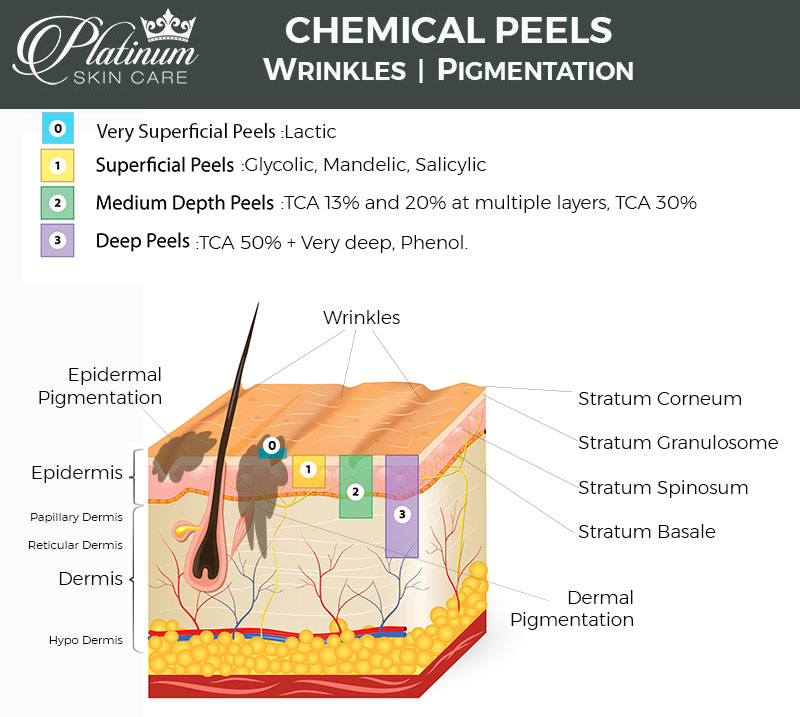
This is a big concern when trying to fix certain issues. Pigmentation for example can run very, very deep in the skin. Down into the dermis. Acne will run quite deep as well. Different acids, and layers of acids, will penetrate different depths into the skin. So it is best to understand where your issues are when choosing an acid. Here is an example of your skin's layers and how deep the acids can penetrate.
According to the chart below, if you have just mild pigmentation, you can use pretty much any of the hydroxy acids. But, if you have dermal melasma that has been very problematic and unyielding, you will need to use a multi-layered peel and most likely combine it with other modalities such as melanin inhibitors and laser treatments to reach the depths where it lies. This will also help to explain why that topical lightening cream may not be working for you!
Which Chemical Peel Is Best For Me? Before we got to this question I wanted to make sure I covered a few things:
At this point it's time to start taking a deeper dive into which peels are the best fit for your situation. Thanks to different acids having similar benefits, many acids can tackle more than one issue and vice versa. That's why we ask you so many questions when we consult over the phone. We want to find which peel is going to work best for your particular combination of problems and tolerance levels. The steps below will help you determine which peels actually make sense for your skin type, condition, and experience. Let's get started!
Excellent for 1st timers.
A level 1 peel will give a light tingle or itchy feeling. Many people with a high tolerance will feel nothing at all!
Perfect for those needing more than the mildest acids can provide.
A level 2 peel can also give a light tingle/itch but can go up to a light sting.
For those receiving professional peels or looking to move up in strength.
A level III peel can be quite intense starting with a sting and becoming hot.
Are you ready to find your peel?
By using the simple charts below you can find which peels will work for your skin-tone, skin condition, and the levels available.
Use this as a simple guide to understand the peel charts below!


The level supported by this peel and skin tone are in the purple squares
Check to see if your skin condition is listed here
The peels available will be listed here!
Last but not least, we’ll show you what to expect for the peel in question!
Now that you have an idea of each of the classifications we use, now it's time to look through the peels and find the one that makes the most sense for your situation. Remember: All acids have the same main function. They dissolve the bonds that hold the dead layers of skin to your face/body. There are differences in how they work though. Some penetrate just the uppermost layers, and some can dig deep into the skin. Some are attracted to oil and some are attracted to water. The one that is best for you is the one that can solve all your needs the most efficiently.
“Light natured” alpha hydroxy glycolic, has the ability to create a dramatic or minimal result *depending on strength. It falls into the very-superficial to superficial peel category.
Glycolic has a small molecule which penetrates the epidermis easily. It is a water soluble general acid that commonly treats anti aging issues, improves mild sun damage, reduces wrinkles, and improves the overall health and look of your skin.
6-8 treatments will be administered in weekly or bi-weekly increments.
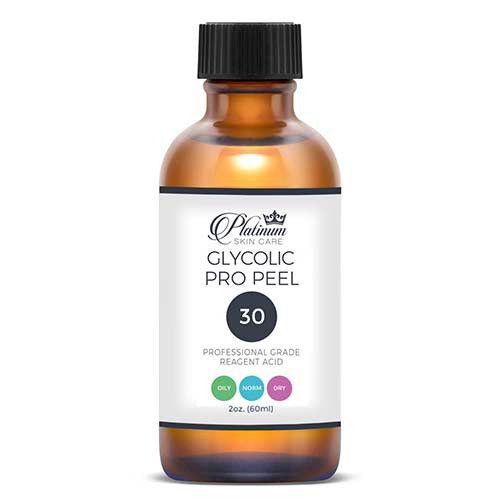
After a peel you may experience some of the following: Pink flush, tightness, dryness, slight flakes (after 3+ days) and mild itching. With a mild 30% you may not see any visible flaking, though microscopic exfoliation is still occurring. Follow through complete series for final results. Full Instructions/Video/ available upon request.
Beta hydroxy salicylic, is an oil soluble acid and is extremely beneficial to those with clogged pores and acne. It also has anti-inflammatory and antimicrobial properties.
Salicylic is well tolerated in all skin tones and types. It is very effective for PIH (post inflammatory pigmentation), oily skin, rough skin and mild photo damage. It is predominately used for acne and acne vulgaris with excellent results.
6-8 treatments will be administered in weekly or bi-weekly increments.
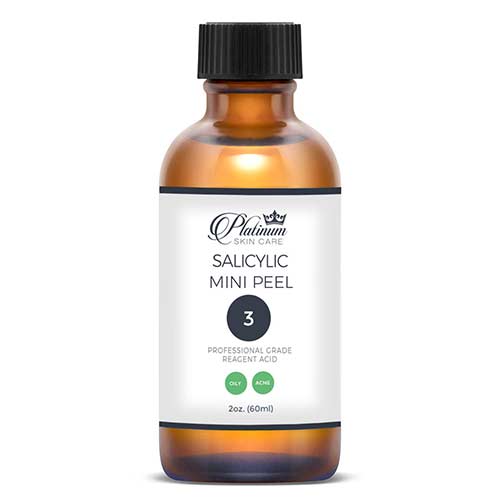
After a peel you may experience some of the following: Pink flush, tightness, dryness, slight flakes (after 3+ days) and mild itching. With a mild salicylic peel you may not see any visible flaking, though microscopic exfoliation is still occurring. Follow through complete series for final results. Full Instructions/Video/available.
Alpha hydroxy mandelic, is a milder irritation acid that will give excellent results with acne, pigmentation, wrinkles and melasma without risks of post inflammatory hyperpigmentation.
Mandelic has a larger molecule which penetrates the epidermis slowly and evenly. It is an excellent acid choice for all skin types, and can even be used on tweens and teens for acne control. It is a safe peel that can be used weekly
6-8 treatments will be administered in weekly or bi-weekly increments.
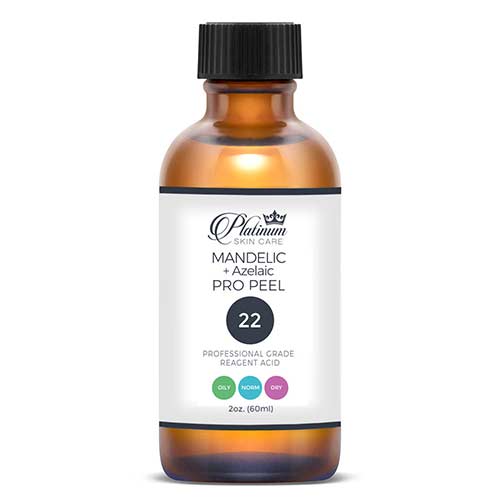
After a peel you may experience some of the following: Pink ush, tightness, dryness, slight flakes (after 3+ days) and mild itching. With a mild 22% you may not see any visible flaking, though microscopic exfoliation is still occurring. Follow through complete series for final results. Full Instructions/Video/ available upon request.
Alpha hydroxy lactic, is a milder irritation acid that will give subtle to no visible peeling, therefore it is excellent for those looking for a “light” peel.
Lactic is shown to inhibit tyrosinase enzyme activity directly, so it is a key peel to use when dealing with pigmentation issues. It will also help to improve chronically dry skin due to its hygroscopic property.
6-8 treatments will be administered in weekly or bi-weekly increments.
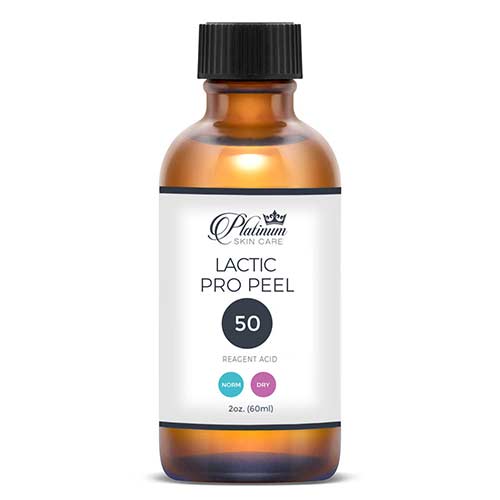
After a peel you may experience some of the following: Pink flush, tightness, dryness, slight flakes (after 3+ days) and mild itching. With a mild lactic peel you may not see any visible flaking, though microscopic exfoliation is still occurring. Follow through complete series for final results. Full Instructions/Video/available.
TCA, as it commonly goes by, is one of the most well studied acids available. Its superiority comes from its versatility. It can be applied in a single layer as a superficial peel, or it can be layered to deepen penetration. *Safety dictates that more layers of a lower % is always the best method.
TCA is generally well tolerated in all skin tones and types with proper preparation. It is very effective for pigmentation, wrinkles, fine lines, rough skin, photo damage, flat warts, skin laxity, acne and scarring.
6-8 treatments will be administered in bi-weekly/monthly increments.
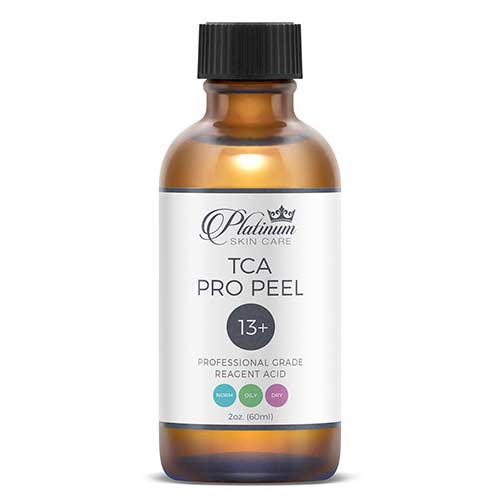
After a peel you may experience some of the following: Pink flush, tightness, dryness, slight flakes (after 3+ days) and mild itching. With a superficial TCA peel you may only see light visible flaking on certain areas of the face. Deeper peels can cause the dead skin tissues to darken prior to exfoliating off as flakes. This is normal. Peeling will continue for another 3-5 days once initiated. Full Instructions/Video/available.
The traditional Jessner’s peel is equal parts resorcinol, lactic and salicylic acids of 14%. It is the preferred peeling agent for oily, acne prone skin because of its safety. *No need for neutralization.
Jessners is well tolerated in all skin tones and types with proper prep. It is commonly alternated with TCA peels and strong retinoid usage. Vitamin A (Luminosity method) can also be applied after a Jessner’s peel to increase flaking.
6-8 treatments will be administered in weekly or bi-weekly, then monthly to keep skin controlled.
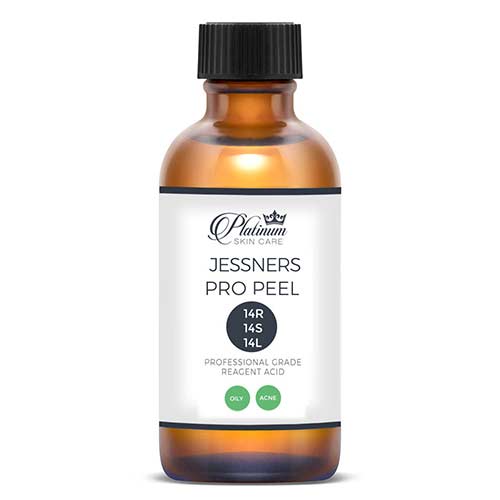
After a peel you may experience some of the following: Pink flush, tightness, dryness, flakes (after 3+ days) and mild itching. With only 1 layer you may not see any visible flaking, but with 2-4 layers expect a darkening of skin dead tissues and heavier flaking. Follow through complete series for final results. Full Instructions/Video/available.
Platinum Skin Care creates ONLY Certified Chemical Peels and at home peels. Each peel you purchase will come with documentation papers and package markings to match. Each safety sealed and guaranteed to be:
How many peels will I get out of a bottle? Here's how we figure how many chemical peels you will get from each bottle. There are 456 drops per each 1oz. of solution, Therefore ...
*It is important to understand that a single treatment, be it laser, microdermabrasion or a chemical peel, is not enough to keep skin clear and younger looking. As any reputable skin care expert will tell you, a daily program is the key to consistent, clearer, younger looking skin.
Our TCA is a Reagent Grade (ACS). This is the highest purity level that can be attained. It meets the standards of ACS Reagent Chemicals, Current Edition. Reagent grade chemicals are high quality and purity for laboratory use. The American Chemical Society Committee on Analytical Reagents establishes the standards for reagent chemicals. All of our chemical peels are created inside of an FDA registered laboratory. Again, this is about quality and safety for our clients.
Since you have taken the time to read this page, learned all about what chemical peel acids you should choose, and the percentages and pH levels available to you, it's time to go peel shopping.
Should you still have any questions, or need additional information about our best chemical peels or choosing a peel that's right for your skin, a Platinum Skin Care Specialist is available at 1-800-917-3155 or 1-586-598-6093 or you can get a free consultation with one of our specialists.
WARNING: You should not have a chemical peel if you have excessive exposure to the sun as you will be more prone to sun damage without sufficient sun block.
For the best results with any chemical peel, you should first follow a skin care regimen which may include the use of AHAs, Retin A, Kojic Acid, Alpha Arbutin, etc. to prepare your skin's surface, and even out the skin tone itself. *EX- Retinol .10% (or Serum 15%) and Vitamin C Complex daily. If you have pigmentation you should implement the Fade-Bright as well. This will make the peel more effective and will make your skin less likely you hyper-pigment. * Make sure you have a supply of SPF (100% uva & uvb) to protect your skin before and after the peel. A minimum of 25 is required.
TCA chemical peels may produce some unintended color changes in the skin. This may be prevented by using a bleaching cream 2-3 weeks prior to treatment and usually occurs with darker skin. We highly suggest the Fade-Bright if you have naturally pigmented skin or you are prone to pigmentation.
Most people will be able to continually see the results of their TCA peels for 6 months - two years. If you use professional collagen inducing, exfoliating skin care products regularly after your peel, you will maximize the duration of improvement. Most people opt to perform 1-3 more TCA chemical peels throughout the year to keep everything looking fresh after their Series is completed. Combining other lighter hydroxy acids during the "off time" will also aid in keeping the skin regenerating.
You should NOT have a TCA or Jessner chemical peel if you will continue to have excessive exposure to the sun, have an active Herpes lesion, warts, history of keloidal scarring, any type of recent facial surgical procedures, used Accutane in the last year (it will increase your chances of scarring), if you're pregnant, lactating, have an aspirin allergy (Jessners), any auto immune diseases, prior chemical peel sensitivities, seborrheic dermatitis, collagen disease, atopic, eczema (et. Al.), have had any recent radioactive or Chemotherapy treatments, sunburn, windburn, broken skin or have recently waxed or have recently used a depilatory such as Nair or use Vaniqua.
TCA chemical peels may produce some unintended color changes in the skin. This may be prevented by using a bleaching cream 2-3 weeks prior to treatment and usually occurs with darker skin. We highly suggest the Fade-Bright if you have naturally pigmented skin or you are prone to pigmentation.
TCA Chemical Peels TCA gets its strength from being applied in multiple layers. A layer is a single application of the acid during a peel treatment. Multiple layers will be applied to progress the peel deeper into the skin - without washing off any previous layers.
** If you have never had a TCA chemical peel before, we suggest applying only 1 layer the first time you perform the peel. You can then strengthen the peel with additional layers as you move forward in the process. We suggest the 13% for beginners and those with sensitive skin. If you have extremely sensitive skin, the 7% TCA can be used.
**For reference - the Obaji Blue Peel is either a 15% or 20% (doctor's preference/patient's skin) TCA solution applied in 3-5 layers in a doctor's office.
A Jessner peel is also commonly applied in multiple layers in a professional setting. The same information applies as above. *Due to the fact that a Jessners blend is stronger than many singular mild acids, Platinum Skin Care does not recommend applying more than 1-2 layers the first time the acid chemical peel is used, and never more than 5 layers. *You will judge when to stop applying layers by achieving a frost on the skin.
There should be no discomfort following the procedure. You will wash your face twice daily with a gentle cleanser and apply a moisturizing ointment. With a high % of TCA, your face can initially appear red. Within a few days, your stratum corneum (outermost 20 layers of skin) will turn darker, and prepare to peel. The flaking is usually complete in four to seven days. Once your skin has finished peeling, you may begin wearing makeup. You should resume skin care within two weeks of your procedure. Any post "flushed" appearance will fade slowly over several weeks.
After your peel it will be important to moisturize your skin with a quality, healing ointment. We recommend Emu oil mixed with Copper Serum, Regenerate Epidermal Growth Factor, Bacitracin, or another comparable product.
Need help choosing the right products and how to use them for best results? Talk to one of our acne experts today and get a custom plan tailored to your skin.
Get your consultation


Proud to be Cruelty Free
Platinum Skincare is proud to be cruelty free. Not one of our products are tested on animals and we use no services or laboratories that do animal testing, we never have and never will.
Learn More
Leaping Bunny Certified
Platinum Skincare, certified by Leaping Bunny, proudly upholds cruelty-free practices. Our commitment ensures that none of our products undergo animal testing.
Learn More