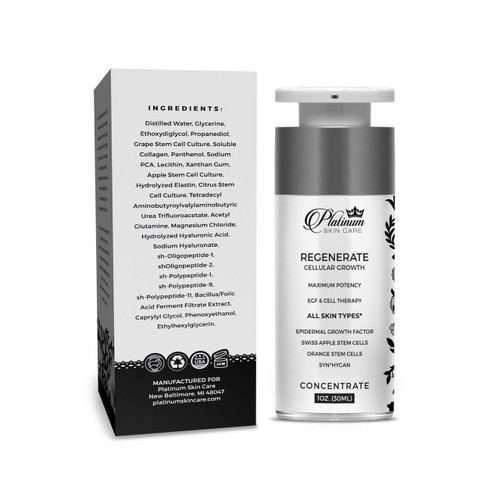
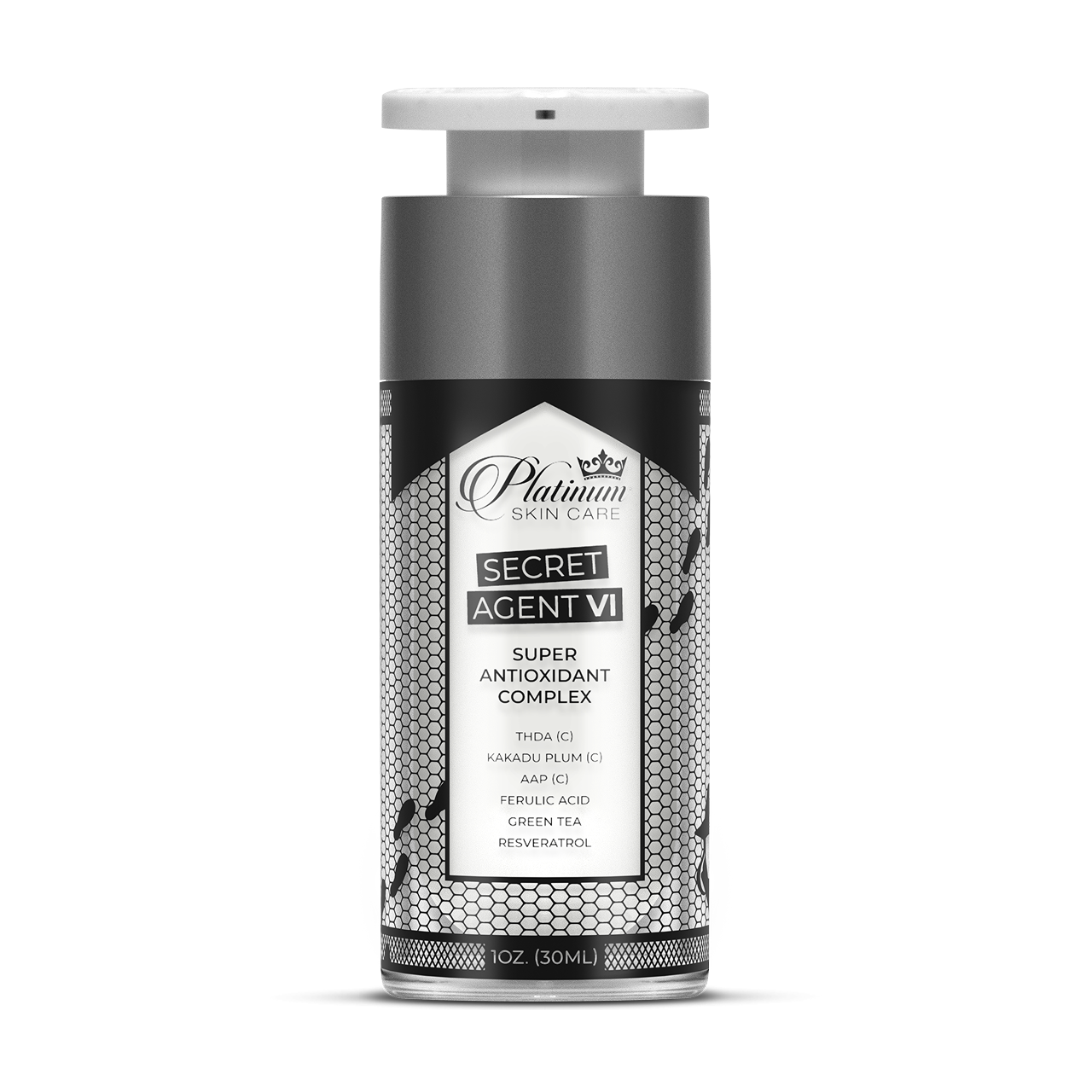


Purified Water, Tetrahexyldecyl Ascorbate, Ethoxydiglycol, Butylene Glycol, Cetyl Alcohol, Caprylic/Capric Triglyceride, Glyceryl Stearate, Terminalia Ferdinandiana Fruit Extract, Aminopropyl Ascorbyl Phosphate, Resveratrol, Ubiquinone, Ferulic Acid, Glycerin, Tocopherol, Camellia Sinensis (Green Tea) Leaf Extract, Cyclomethicone, Dimethicone, Sodium Acrylate/ Sodium Acryloyl Dimethyl Taurate Copolymer, Polysorbate 20, Sodium Citrate, Phenoxyethanol, Ethylhexylglycerin. 1oz (30ml.)
Superox-C™ AF is a registered trademark of Lucas Meyer Cosmedics.
Citations:
1. Vitamin C attenuates ERK signaling to inhibit the regulation of collagen production by LL-37 in human dermal fibroblasts. Experimental Dermatology 2010; 19: e258–e264. Hyun Jeong Park, Sun Myeong Ock, Hee Jung Kim, Hong Jin Park, Young Bok Lee, Jung Min Choi, Chul Soo Cho, Jun Young Lee, Baik Kee Cho, Dae Ho Cho
2. Topically Applied Vitamin C Enhances the mRNA Level of Collagens I and III, Their Processing Enzymes and Tissue Inhibitor of Matrix Metalloproteinase 1 in the Human Dermis 1. Journal of Investigative Dermatology. 1 Part of this work was presented in poster form at the American Academy of Dermatology, San Francisco, CA, March 10–15, 2000. Betty V. Nusgens,Alain C. Colige,Charles A. Lambert,Charles M. Lapière,Philippe Humbert,André Rougier,Marek Haftek,Alain Richard,Pierre Creidi
3. The Roles of Vitamin C in Skin Health. Juliet M. Pullar, Anitra C. Carr, and Margreet C. M. Vissers: 23 Ways to reduce wrinkles PMCID: PMC5579659
4. Double-Blind, Half-Face Study Comparing Topical Vitamin C and Vehicle for Rejuvenation of Photodamage. Richard E. Fitzpatrick MD, Elizabeth F. Rostan MD *10% Lascorbic, 7% THDA.
5. Sodium l-ascorbate enhances elastic fibers deposition by fibroblasts from normal and pathologic human skin. J. Dermatol. Sci. 2014;75:173–182. Hinek A., Kim H.J., Wang Y., Wang A., Mitts T.F.
6. Ozone-induced damage in 3D-kkin model is prevented by topical vitamin C and vitamin E compound mixtures application. J. Dermatol. Sci. 2016;82:209–212. Valacchi G., Muresan X.M., Sticozzi C., Belmonte G., Pecorelli A., Cervellati F., Demaude J., Krol Y., Oresajo C.
7. Vitamin C compound mixtures prevent ozone-induced oxidative damage in human keratinocytes as initial assessment of pollution protection. Valacchi G., Sticozzi C., Belmonte G., Cervellati F., Demaude J., Chen N., Krol Y., Oresajo C.
8. Gene expression profiling reveals new protective roles for vitamin C in human skin cells. Free Radic. Biol. Med. 2009;46:78–87. Duarte T.L., Cooke M.S., Jones G.D.
9. Ascorbic acid stimulates production of glycosaminoglycans in cultured fibroblasts. Exp. Mol. Pathol. 1990;53:1–10. Kao J., Huey G., Kao R., Stern R.
10. The role of vitamin C in pushing back the boundaries of skin aging: An ultrasonographic approach. Clin. Cosmet. Investig. Dermatol. 2015;8:463–470. Crisan D., Roman I., Crisan M., Scharffetter-Kochanek K., Badea R.
11. Inhibition of UVR-induced tanning and immunosuppression by topical applications of vitamins C and E to the skin of hairless (hr/hr) mice. Pigment Cell Res. 2000;13:89–98. Quevedo W.C., Jr., Holstein T.J., Dyckman J., McDonald C.J., Isaacson E.L.
12. Improved scar appearance with combined use of silicone gel and vitamin C for Asian patients: A comparative case series. Aesthet. Plast. Surg. 2013;37:1176–1181. Yun I.S., Yoo H.S., Kim Y.O., Rah D.K.